
How AI Is Transforming Digital Marketing in 2026
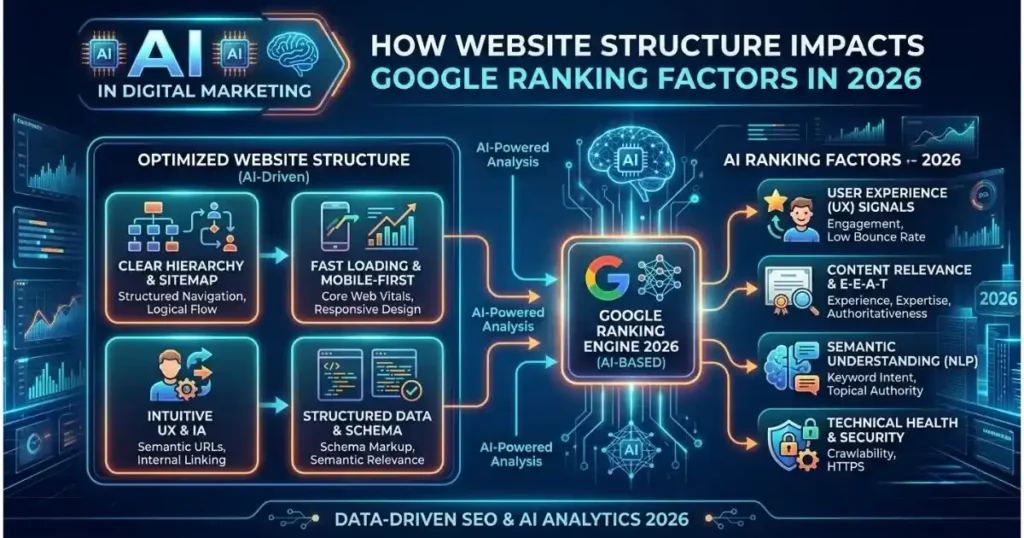
Digital marketing in 2026 operates in a landscape defined by automation, predictive intelligence, real-time personalization, and continuous optimization. What once required large teams, manual reporting, and broad audience targeting is now eexecuted with speed and precision through AI in digital marketing. Businesses are no longer relying on guesswork or isolated campaigns. Instead, they are building integrated ecosystems powered by machine learning, behavioural analytics, and automated decision-making systems. At the same time, generative AI for marketing is redefining how brands create content, test campaigns, and scale communication without sacrificing efficiency.
The transformation driven by AI in digital marketing is not a temperary trend. It represents a structural shift in how companies attract, engage, and retain customers. From customerection to performance forecasting, artificial intelligence now influences nearly every stage of the marketing funnel. Meanwhile, generative AI for marketing is accelerating creative production, enabling brands to develop personalized messaging, ad variations, and storytelling assets faster than ever before.
The Strategic Importance of AI in Digital Marketing
The growing complexity of digital platforms makes AI in digital marketing essential rather than optional. Consumers expect instant responses, relevant recommendations, and seamless cross-device experiences. Meeting these expectations manually is inefficient and unsustainable. Artificial intelligence allows marketers to analyze massive volumes of behavioral data in seconds, identify patterns, and optimize campaigns in real time.
Generative AI for marketing complements this capability by assisting with rapid content development. Instead of spending weeks producting multiple variations of ads or emails, brands can generate structured drafts quickly and refine them strategically. The synergy between AI in digital marketing and generative AI for marketing increases speed, precision, and scalability across campaigns.
Hyper-Personalization at Scale
One of the most powerful outcomes of AI in digital marketing is advanced personalization. Modern algorithms evaluate browsing behavior, purchase history, engagement patterns, location signals, and device usage to create tailored user experiences. Customers in 2026 expect brands to understand their preferencees without explicitly stating them.
Generative AI for marketing supports hyper-personalization by producing dynamo content variations aligned with different audience segments. Personalized emails, customized landing pages, targeted product recommendations, and behavior-triggered notifications are now standard. AI in digital marketing ensures that personalization occurs automatically, while generative AI for marketing provides the creative flexibility needed to maintain relevance. This combination strengthens engagement and increases conversion potential.
AI-Powered Content Creation and Creative Accelegation
Content production demands have grown significantly. Blogs, social posts, email campaigns, video scripts, and ad copy must be produced consistently to maintain visibility. AI in digital marketing streamlines content workflows by assisting with research, keyword structuring, and performance analysis.
Generative AI for marketing takes this further by creating structured drafts, headline variations, social captions, and campaign concepts within minutes. However, effective implementation requires human oversight to preserve brand voice and authenticity. AI in digital marketing enhances productivity, while generative AI for marketing expands creative capacity. Together, they enable brands to produce scalable content without compromising strategic quality
Smart Advertising and Automated Optimization
Digital advertising has become increasingly competitive, requiring precise targeting and continuous adjustments. AI in digital marketing automatically manages bidding strategies, audience segmentation, placement optimization, and budget allocation. Instead of relying on manual monitoring, marketers use intelligent systems that optimize campaigns based on real-time performance data.
Generative AI for marketing assists in producing multiple ad creatives for A/B testing, allowing businesses to identify high-performing variations quickly. AI in digital marketing then evaluates click-through rates, engagement metrics, and conversion data to refine targeting strategies. This integrated system increases return on investment while reducing inefficiencies
Predictive Analytics and Forecasting
Predictive intelligence is a defining feature of AI in digital marketing. Machine learning models forecast customer lifetime value, purchase probability, churn risk, and seasonal demand patterns. These insights enable businesses to allocate resources strategically and anticipate market shifts before competitors react.
Generative AI for marketing enhances predictive strategies by generating customized offers and messaging aligned with forecasted behaviors. For example, if data indicates high churn risk among a segment, AI systems can trigger retention campaigns with personalized incentives. AI in digital marketing transforms historical data into forward-looking strategies that improve long-term profitability
Conversational Marketing and Intelligent Chatbots
Customer expectations for instant communication have made chatbots a core component of AI in digital marketing. Advanced conversational systems answer questions, guide users through purchasing journeys, qualify leads, and schedule appointments without human intervention. These systems operate continuously, ensuring that no opportunity is missed.
Generative AI for marketing improves chatbot interactions by creating more natural, context-aware responses. Conversations feel increasingly human-like, enhancing user trust and engagement. AI in digital marketing ensures accurate routing and response timing, while generative AI for marketing refines communication style and clarity.
Voice and Visual Search Optimization
Voice search and image recognition technologies are expanding rapidly. AI in digital marketing helps brands optimize content for conversational queries, long-tail keywords, and structured data formatting. Search engines increasingly rely on machine learning to interpret spoken requests and visual inputs.
Generative AI for marketing assists by creating conversational content that aligns with voice search behavior. Structured answers, FAQ formats, and context-rich descriptions improve visibility. AI in digital marketing ensures that brands remain discoverable in emerging search environments shaped by evolving user behavior.
Automated Email Marketing and Behavioral Triggers
Email marketing continues to deliver strong returns, but automation has elevated its sophistication. AI in digital marketing enables advanced segmentation, predictive send-time optimization, and behavior-triggered workflows. Emails are no longer generic broadcasts; they are personalized interactions driven by data.
Generative AI for marketing supports this by drafting tailored subject lines, content blocks, and promotional sequences for different audience segments. AI in digital marketing monitors performance metrics and adjusts timing or messaging automatically. This synergy improves open rates, engagement levels, and conversion outcomes.
Conversion Optimization Through Intelligent Testing
Driving traffic without optimizing conversions reduces profitability. AI in digital marketing analyzes user behavior through heatmaps, click tracking, and session data to identify friction points within funnels. Machine learning models recommend design improvements and test variations automatically.
Generative AI for marketing contributes by creating multiple landing page versions for experimentation. AI in digital marketing evaluates performance metrics and scales winning variations. Continuous testing ensures that marketing systems improve steadily rather than remaining static.
Social Media Intelligence and Sentiment Analysis
Social platforms generate vast volumes of data daily. AI in digital marketing processes engagement patterns, trending topics, audience sentiment, and posting performance metrics. These insights inform strategic content planning and community engagement.
Generative AI for marketing accelerates the creation of trend-based posts, captions, and campaign ideas. AI in digital marketing then measures effectiveness and refines strategies accordingly. This feedback loop strengthens brand presence and maximizes reach.
Security, Fraud Detection, and Transparency
Digital advertising fraud and bot traffic present signifi can’t challenges. AI in digital marketing detects suspicious behavior, invalid clicks, and unusual traffic patterns. This protects marketing budgets and ensures more accurate reporting.
While generative AI for marketing focuses primarily on content and messaging, AI in digital marketing safeguards operational integrity. Transparency and security have become essential for maintaining trust and ensuring sustainable performance
Balancing Automation with Human Strategy
Despite its advantages, AI in digital marketing must be implemented responsibly. Over-automation can weaken brand authenticity or create impersonal interactions. Generative AI marketing should enhance creativity rather than replace strategic oversight. Ethical data usage and transparent practices are critical for maintaining customer trust.
Businesses that combine human expertise with AI-driven efficiency achieve the strongest results. AI in digital marketing handles data processing and optimizeation, while marketers focus on strategy, storytelling, and long-term brand development.
Preparing for the Future
As technology advances, AI in digital marketing will become increasingly predictive, autonomous, and integrated across platforms. Generative AI for marketing is expected to expand into multimedia creation, interactive experiences, and advanced personalization models. Companies that invest early in intelligent systems will maintain long-term competitive advantages.
Adopting AI requires structured planning, team training, and clear performance measurement frameworks. AI in digital marketing is not a short-term experiment but a foundational element of modern strategy. Generative AI for marketing provides scalable creativity, while intelligent analytics ensures measurable growth
Final Thoughts
Artificial intelicence has fundamentally reshaped marketing in 2026. From predictive analytics to automated optimization, personalization to performance tracking, AI in digital marketing drives efficiency and precision at every stage. Simultaneously, generative AI for marketing empowers brands to produce scalable, engaging, and customized content faster than ever before.
The future belongs to businesses that combine data intelligence with human creativity. AI should amplify strategic thinking rather than replace it. Companies that integrate AI in digital marketingng thoughtfully and leverage generative AI for marketing effectively will achieve sustainable growth, stronger customer relationships, and long-term leadership in an increasingly competitive digital environment.